
Decking Material Guide for Michigan Homeowners
Picking decking material in Michigan isn't just about looks. Our freeze-thaw cycles, heavy snow loads, and humid summers chew through cheap materials and reward smart ones. Here is an honest breakdown of the four most common options, what they really cost, and how long you can expect them to last.
The Four Main Options
1. Pressure-Treated Pine (Most Common, Lowest Up-Front Cost)
The standard "green wood" deck most Michigan homes were built with. Southern yellow pine treated with copper-based preservatives to resist rot and insects.
- Material cost: Lowest. Roughly $2-$4 per linear foot for 5/4×6 boards at typical retail.
- Lifespan in Michigan: 10-15 years with regular maintenance. Less if it's neglected.
- Maintenance: High. Needs annual cleaning, plus staining or sealing every 2-3 years to prevent splitting, cupping, and gray weathering.
- Best for: Tight budgets, rental properties, or temporary decks.
What we see on Michigan jobs: Pressure-treated decks that weren't sealed regularly tend to look rough by year 7. Splits, raised grain, and popped fasteners are common. It's a workable material if you commit to the maintenance. Most homeowners don't.
2. Cedar (The Mid-Range Natural Wood)
Western red cedar is naturally rot and insect resistant. It's softer and lighter than pressure-treated pine, with that beautiful warm tone that aged hardwood lovers want.
- Material cost: Roughly $5-$9 per linear foot for decking boards.
- Lifespan in Michigan: 15-25 years with maintenance.
- Maintenance: Medium-high. Like pressure-treated, it needs sealing every couple years to retain color and prevent splitting. Left untreated it turns silver-gray.
- Best for: Homeowners who want real wood, beautiful look, and don't mind maintenance.
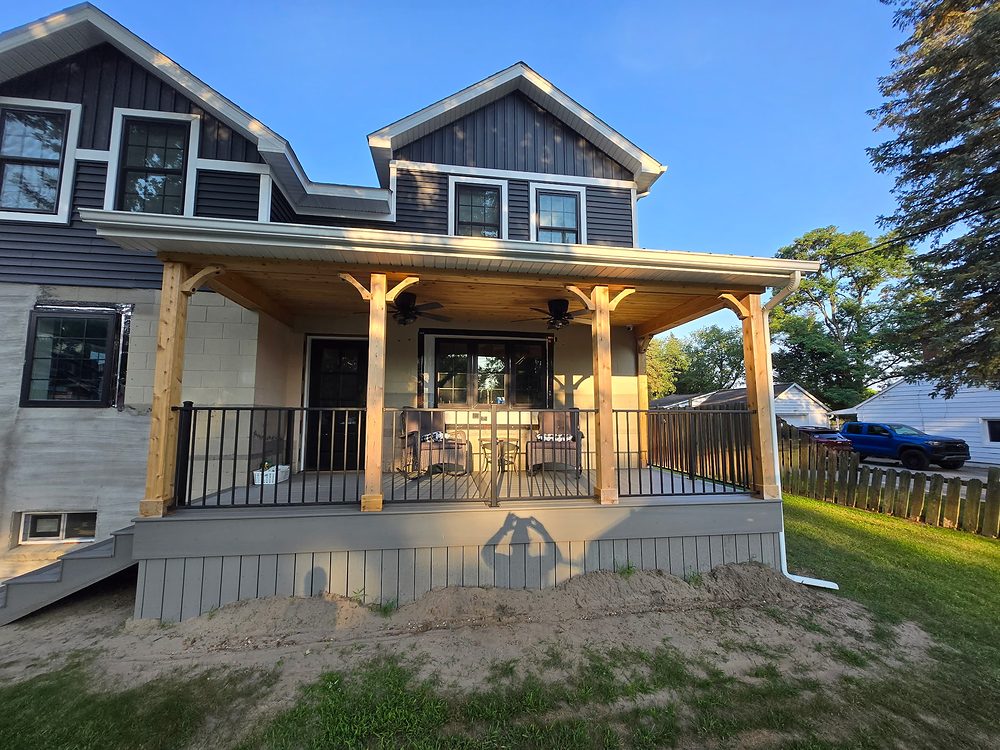
Note on cedar ceilings: Cedar absolutely shines as a covered porch ceiling material - tongue-and-groove cedar boards installed under a roof are protected from the worst weather and look incredible for decades. We use this combination often on covered decks.
3. Composite (Trex, TimberTech, Fiberon, etc.)
A blend of recycled wood fibers and plastic, usually capped with a protective polymer shell. The dominant choice for new Michigan decks over the last decade.
- Material cost: Roughly $7-$13 per linear foot depending on brand and capped vs. uncapped.
- Lifespan in Michigan: 25-30+ years. Most premium brands carry 25-year stain and fade warranties.
- Maintenance: Low. Annual rinse, occasional soap and water. No staining, no sealing.
- Best for: Homeowners who want a "build it and enjoy it" deck. The most popular choice we install today.
Real talk on composite in Michigan: Premium capped composite (Trex Transcend, TimberTech Advanced PVC, Fiberon Concordia) handles our freeze-thaw beautifully. Cheap composite from 15+ years ago had real problems with mold and color fade, but the current generation is night and day better. Avoid uncapped budget composite - it's not worth the savings.
4. PVC (Azek, TimberTech AZEK)
100% synthetic. No wood content. The most weather-resistant decking material on the market.
- Material cost: Roughly $9-$15 per linear foot.
- Lifespan in Michigan: 30+ years. Many manufacturers offer lifetime warranties.
- Maintenance: Lowest of any option. Won't rot, can't be eaten by insects, doesn't grow mold readily.
- Best for: Waterfront, shaded/wet locations, or homeowners who want to install once and forget.
Where PVC wins: Lakeside docks and decks, ground-level or shaded decks where composite can develop mold, and anywhere maximum lifespan matters. It does feel slightly different underfoot than composite (a bit cooler, more "plastic"), and gets warm in direct summer sun like all decking does.
Total Cost Reality Check
People focus on material cost per board. The real cost of a deck is roughly:
- 30-40% decking boards
- 15-20% structural framing (joists, beams, posts) - this is pressure-treated regardless of what you choose on top
- 10-15% railing system - often more expensive per linear foot than the decking itself
- 5-10% fasteners and hidden clip systems
- 5% footings, hardware, and permits
- 20-25% labor
This is why upgrading from pressure-treated to composite usually adds 30-40% to the total project cost - not double or triple, like the per-board numbers might suggest.
The Michigan-Specific Considerations
Freeze-Thaw
Water gets into wood, freezes, expands, and cracks the cells. Repeat 50+ times a winter. This is what shortens wood deck lifespan and why sealed wood lasts far longer than untreated wood. Composite and PVC don't care - they don't absorb water.
Snow Load
Michigan deck framing has to handle real snow weight. We size joists conservatively, use proper post-to-beam connections, and don't undersize footings. This applies regardless of what you put on top.
Humid Summers and Shade
Shaded decks under tree cover stay damp and grow algae quickly. This is where capped composite and PVC pull ahead of any wood. We've replaced 5-year-old pressure-treated decks in shaded yards that looked like they were 15 years old.
Mosquitoes and Insects
Treated lumber resists carpenter ants and termites. Cedar resists most insects naturally. Composite and PVC are completely uninteresting to bugs.
What We Recommend, Honestly
- Budget-driven build, short stay: Pressure-treated with a commitment to seal it every other year.
- Beautiful natural wood look, willing to maintain: Cedar - especially under a covered porch.
- Build it right and enjoy it - most common case: Premium capped composite (Trex Transcend, TimberTech AZEK PVC, Fiberon Concordia).
- Waterfront or maximum lifespan: 100% PVC.
What to Ask Any Deck Contractor
- Is the framing pressure-treated and properly flashed against the ledger?
- Are you using hidden fastener clips or face-screwing with color-matched screws?
- What's the joist spacing? (Composite often requires 12" or 16" max - some "budget" installs use 24" which voids warranties.)
- What's the warranty - manufacturer's and the contractor's?
- Are footings going below the frost line? (In Michigan that's 42" minimum.)
If a contractor can't answer those quickly, find another one.
Planning a Deck?
Free in-home consultations. We'll walk through materials, layout, and budget without pressure.
(810) 937-6555 Request a Consultation →